At a glance
Peaceful
Pair bonding
Bottom dweller
Colorful
Description
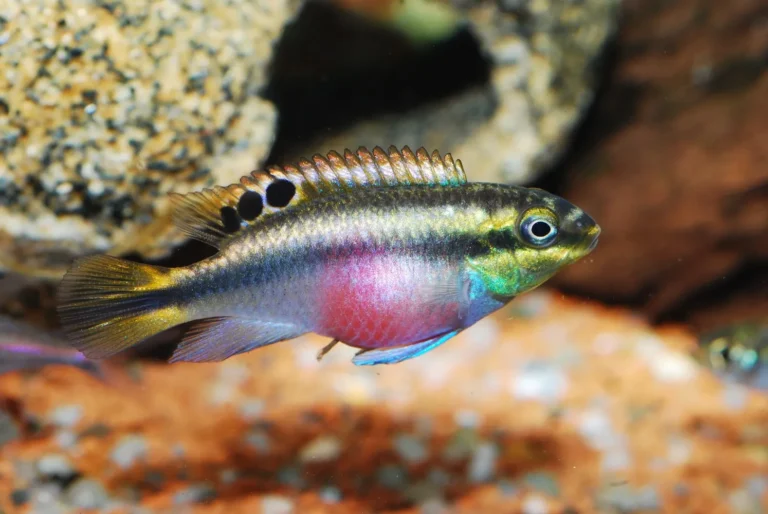
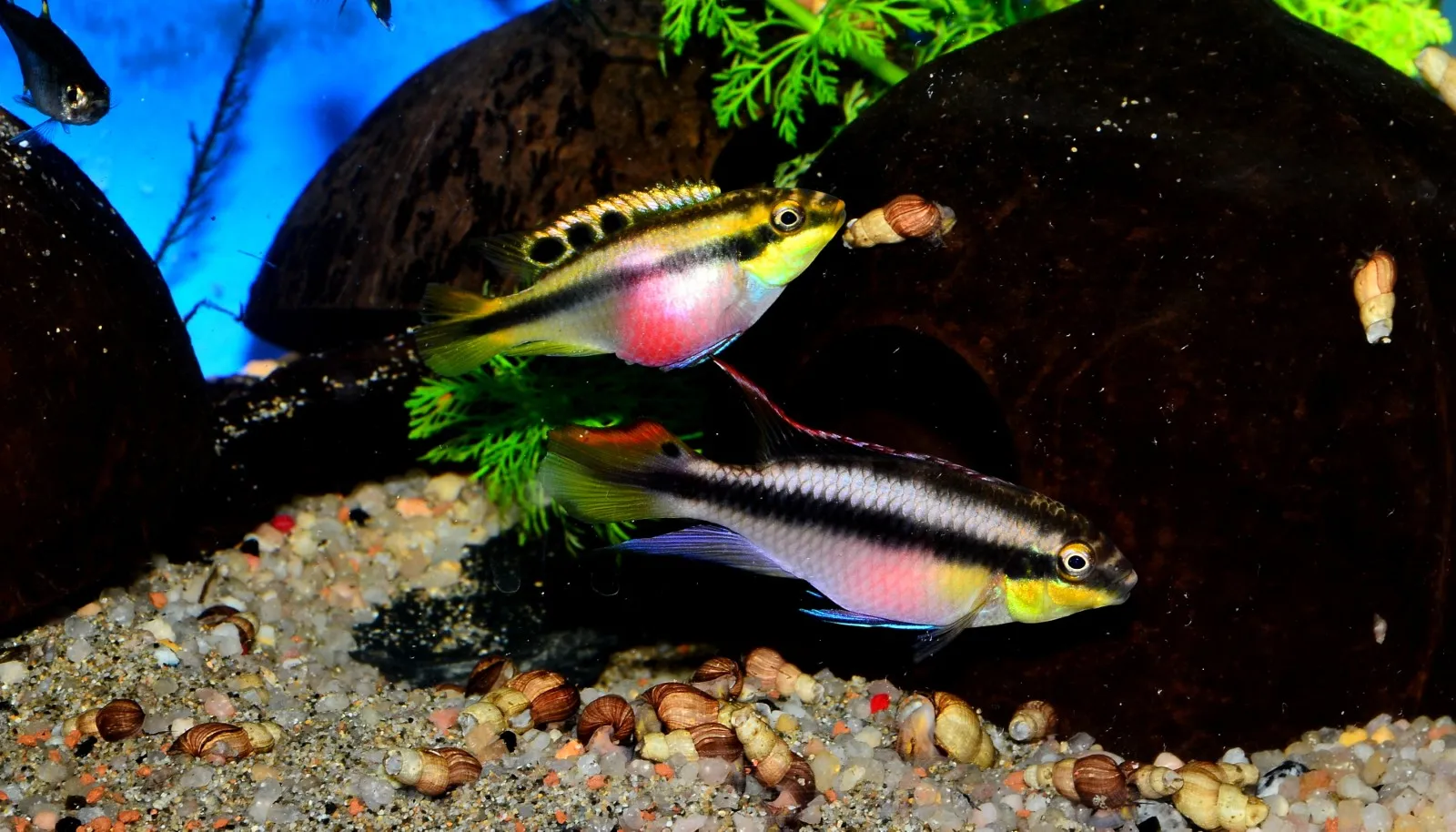
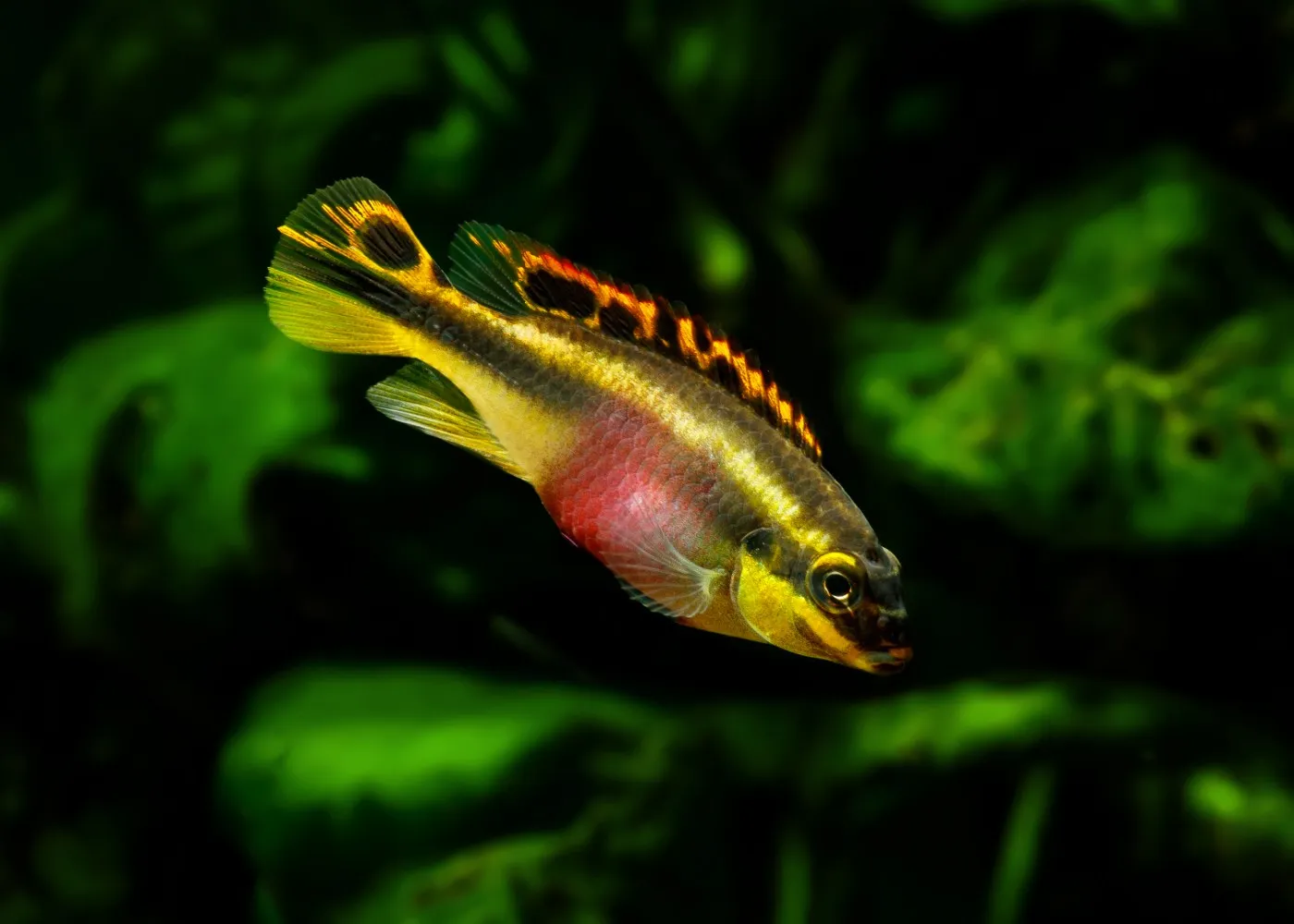
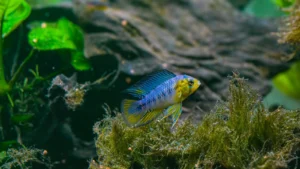
Kribensis is a small, colorful West African cichlid known for its striking purple belly and confident personality. The species Pelvicachromis pulcher shows clear sexual dimorphism with deeper colors in females and longer fins on males. They are popular in aquascapes because they tolerate planted tanks and form strong pairs that guard caves. Care is straightforward with stable warm water, moderate filtration, and plenty of hiding spots.

Quick overview
Kribensis, Krib, Purple krib, Purple cichlid
Peaceful, territorial when breeding
60 liters (15 gallons) for a pair
Ideal aquarium setup
Kribensis do best in a planted aquarium with open swimming areas and distinct hiding spots that mimic West African river margins. Provide warm, stable water and a few caves or hollows for breeding and territorial behavior. Subtle tannins and leaf litter help reduce stress and bring out natural colors.
A 60–100 liter tank is a comfortable home for a single pair; use 100+ liters if keeping a male with multiple females or a community with other species. Larger tanks reduce territorial conflicts during breeding.
Low to moderate lighting works best since Kribs appreciate shaded spots and floating plants; intense light can make them shy and reduce display coloration. Dimming or diffuse light helps plants thrive without stressing the fish.
Robust midground and background plants like Anubias, Java fern, Cryptocoryne and Vallisneria provide cover and territory boundaries while floating plants create shaded areas. Plants reduce aggression and give shy fish places to retreat during spawning.
Low to moderate flow to mimic slow-moving river margins and avoid stressing the fish.
Fine sand or smooth gravel gives a natural look and supports cave placement and digging behavior without damaging fins.
Use a mix of driftwood, stacked rocks, and ceramic or natural caves to create territories and shelters; leaf litter or Indian almond leaves add tannins and foraging surfaces. Leave open swimming lanes in front of caves for displays.

Behavior and temperament
Kribensis are generally peaceful and social but form strong pair bonds and become territorial around a chosen cave. Outside breeding they coexist calmly with similar-sized peaceful species but will defend eggs and fry vigorously. They are moderately active and curious, often exploring the substrate and rockwork. Sudden water changes or bare tanks can increase stress and aggression.
Diet and feeding
Kribensis are omnivores with a preference for protein-rich foods but they also accept plant matter; they adapt well to high-quality flakes or pellets supplemented with frozen or live foods. Offer a varied diet to maintain color and health and avoid overfeeding because they have moderate appetites. During breeding increase protein-rich foods to support conditioning and parental care.
What they eat in nature
Insect larvae, small crustaceans, detritus, plant matter.
What to feed in the aquarium
- High-quality omnivore pellets or flakes.
- Frozen or live brine shrimp and bloodworms.
- Vegetable matter like blanched spinach or spirulina flakes.
Feeding schedule
Feed small portions one to two times daily, offering only what they consume within two to three minutes.
Special dietary needs
No strict needs, but regular small portions of live or frozen meaty foods improve coloration and breeding condition.
Daily:
Offer a small portion of staple pellets or flakes plus occasional live or frozen morsels; inspect leftovers and remove uneaten food.
Weekly:
Include one or two days with primarily frozen or live protein foods and a day with vegetable-rich fare to balance diet.
Always:
Keep diet varied and avoid overfeeding; fresh frozen foods and quality pellets should always be available as staples.
Tankmate compatibility
Kribensis do well with peaceful community fish that occupy different zones and are similar in size, such as small tetras and rasboras. Avoid very small fish that could be seen as food and boisterous or large aggressive cichlids that will bully Kribs. Provide hiding spots and plants to reduce territorial disputes during breeding.
Yes with caution. Adults may hunt or harass small shrimp, so only keep large or well-shelled shrimp like adult Amano with Kribs or provide dense plant cover and hiding spots.
Small snails may be eaten but larger snails like Nerite or well-shelled species usually coexist without issue.
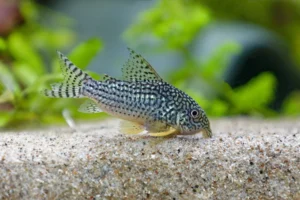
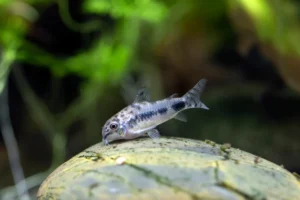
Good tankmates include peaceful midwater species like small tetras, rasboras and bottom-dwelling Corydoras catfish that won't compete for the same cave territory.
Avoid larger or aggressive cichlids and fast fin-nippers such as large barbs, as these species can stress or injure Kribensis and provoke territorial fights.
Keep Kribensis as a single bonded pair in smaller tanks; in larger setups a single male with two to three females can work but multiple males will often fight. Expect strong parental care and defended territories while breeding.
Breeding
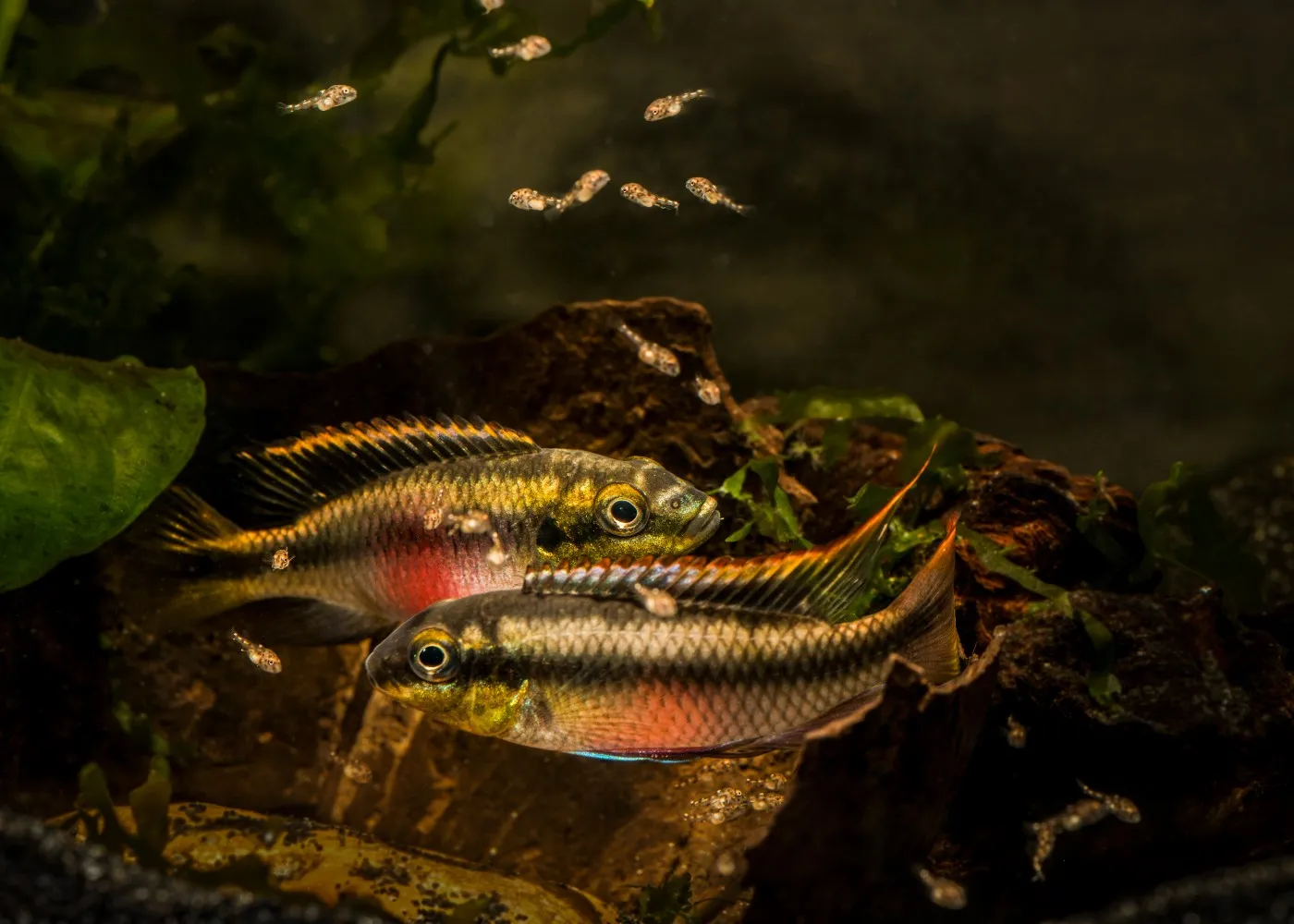
Kribensis are commonly bred in home aquariums and will readily form pairs if conditions are stable and caves are available. Pairs become strongly territorial around a chosen cave and both parents guard the eggs and fry. Slightly softer, acidic water and elevated temperatures encourage spawning.
Difficulty
Easy to medium because they spawn in captivity without complex triggers, but territorial behavior during breeding requires space and hiding places to prevent stress. Maintaining stable water chemistry and a suitable cave makes success more reliable.
How they breed
Cave spawner with biparental care.
Best setup for breeding
Use a small breeding tank with low light, a few caves or clay pots, warm water around 26–28°C and slightly acidic soft water if possible; a sponge filter keeps fry safe. Leaf litter or peat can help mimic natural conditions and encourage spawning.
Feeding the babies
Fry consume mucus and then tiny live foods; begin with infusoria or powdered liquid fry foods for the first days. Move to baby brine shrimp or microworms as they grow, then transition to finely crushed flake or micro pellets.
Pro tips
Provide multiple caves so non-breeding fish can avoid breeders and reduce fights.
Keep water changes regular but small to avoid shocking territorial pairs during breeding.
Condition pairs with high-protein frozen foods for a week before expecting spawning.
Fin nipping
Occasional fin nipping can occur in cramped tanks or when tankmates are very active; increase space and add hiding spots to reduce harassment.
Cloudy water
Overfeeding and insufficient filtration cause cloudy water and stress; reduce portions and improve mechanical/biological filtration with regular maintenance.
Breeding aggression
Pairs become strongly protective and can chase tankmates from their cave; provide visual barriers, extra caves and sufficient tank size to diffuse aggression.
Typical beginner mistakes
- Keeping Kribs in tanks that are too small for breeding.
- Offering only flakes without frozen or live protein supplements.
- Removing all hiding places and leaves which increases stress.
Short summary
Kribensis are colorful, small cichlids that suit planted aquascapes and are rewarding for beginner to intermediate keepers. They are relatively easy to care for, breed in caves with biparental care, and do best with stable water, varied diet and plenty of hiding spots.
Frequently asked questions (FAQs)
Are Kribensis good for planted tanks?
Yes, they thrive in planted tanks with caves and shaded areas and their digging is minimal compared to larger cichlids.
Can Kribensis live with tetras?
Yes, peaceful midwater tetras are good tankmates as long as they are similar in size and the tank is large enough.
How do I tell male and female apart?
Females have a deeper purple or red belly and shorter fins while males are larger with longer dorsal and tail fins.
They may nibble soft plants occasionally but generally leave robust species like Anubias and Java fern alone.
What water temperature do they prefer?
Maintain 24–28°C (75–82°F) for comfort and to encourage breeding behavior.
Is special lighting required for coloration?
No special lighting is required; moderate light with shaded areas and good nutrition will bring out their best colors.