Table of contents
At a glance
Peaceful
Schooling
Small colorful
Timid micro
Description
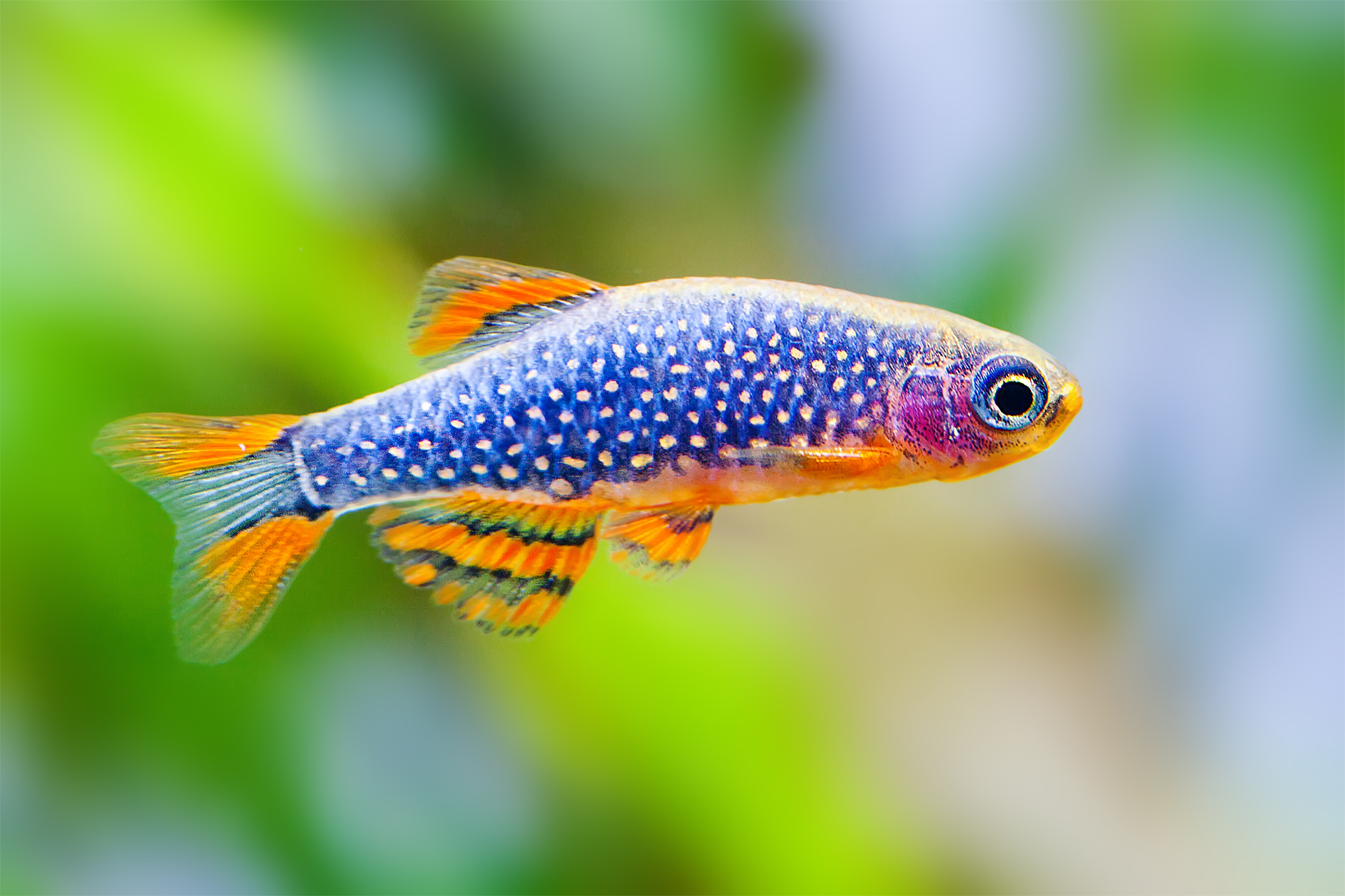
Galaxy Rasbora (CPD) is a tiny jewel-like freshwater fish prized for its bright spots and compact size. Its scientific name is Danio margaritatus, and it shows a dark body studded with iridescent pearl spots and red fins. These fish do best in calm, planted aquariums with stable water and subdued lighting. They are ideal for aquascapes where a peaceful, schooling micro fish is desired.

Quick overview
Galaxy rasbora, Celestial pearl danio, CPD, Danio margaritatus
Danio margaritatus
Cyprinidae
2–2.5 cm (0.8–1.0 inches)
Peaceful, social, schooling
Midwater
40 liters (10 gallons) for a group
Freshwater, pH: 6.0–7.5
1–12 dGH
Easy to medium
Ideal aquarium setup
Galaxy rasboras do best in a planted, stable aquarium that feels close to their natural habitat with lots of hiding places and open midwater for schooling. Keep parameters steady with gentle filtration and regular water changes and provide subdued lighting to reduce stress. A planted aquascape with moss and fine-leaved stems will make them confident and show their best colors.
A 40–80 liter tank is a practical starting point for a small shoal of 6–12 fish; larger tanks allow more natural schooling and stability. Keep groups of at least eight to see natural behavior.
Low to moderate lighting is ideal since bright light makes them shy and reduces activity; floating plants that dim the light are helpful. Under softer light their colors remain vivid while they stay more active.
Fine-leaved stem plants, Java moss, and floating plants suit them well and offer spawning and hiding places. Dense planting helps reduce stress and mimics their shallow, vegetated wild environment.
Low to moderate flow — gentle circulation that does not create strong currents helps them swim comfortably and reduces stress.
A dark fine sand or smooth gravel complements their colors and mimics shallow lake or pond bottoms where they are found.
Use driftwood, small rocks, and leaf litter to create sheltered zones and natural hiding spots; leave open midwater lanes for schooling. Moss mats and fine branches provide spawning sites and refuge for fry.

Behavior and temperament
Galaxy rasboras are peaceful, active midwater schoolers that prefer the safety of a group and will shy away when kept alone. They are sensitive to bright light, aggressive tankmates, and sudden water changes, which can make them bolt and hide. In a properly planted aquarium they become outgoing and display social behaviors like synchronized swimming. Keep them in stable, calm tanks to reduce chronic stress.
Diet and feeding
They are omnivores with small mouths and a preference for micro foods; variety is important for color and health. Regular feedings of small live, frozen, and finely crushed dry foods keep them thriving and support breeding readiness.
What they eat in nature
Micro crustaceans, insect larvae, zooplankton, and algae
What to feed in the aquarium
- High-quality micro flakes or crushed flakes.
- Frozen or live daphnia, baby brine shrimp, and microworms.
- Micro pellets and occasional blanched vegetable matter.
Feeding schedule
Feed small portions twice daily, only what they can consume in about two minutes.
Special dietary needs
No strict needs, but regular small live or frozen foods improve coloration and overall condition.
Daily:
Offer one to two small feedings of micro flakes or crushed pellets each day to match their tiny mouths.
Weekly:
Several times a week provide frozen or live foods such as daphnia and baby brine to boost nutrition and color.
Always:
Always avoid oversized food and remove uneaten portions quickly to keep water quality high.
Tankmate compatibility
Choose small, peaceful fish that occupy different niches and similar water needs so Galaxy rasboras are neither bullied nor outcompeted. Avoid boisterous or large species that nip fins or chase small fish. Compatible setups often emphasize micro tetras, small rasboras, and dwarf corydoras.
Shrimp
Yes with caution — adults usually coexist with larger peaceful shrimp but tiny or newly hatched shrimp may be eaten; provide dense plant cover for shrimp refuge.
Snails
Generally compatible with peaceful snail species like Nerites or Ramshorn, and snails help control algae without bothering the rasboras.
Peaceful fish
Good tankmates include small tetras such as ember tetras, pygmy rasboras, small peaceful Corydoras species, and other micro rasboras that share calm behavior and similar water needs.
Semi-aggressive fish
Avoid boisterous danios, larger barbs, and most cichlids as they can stress or nip these tiny fish and outcompete them for food. Any midwater bully may prevent them from feeding properly.
Same species
They should be kept in groups of at least eight, preferably ten or more, to feel secure and show natural schooling; small groups will be timid and hide more often.

Breeding
Galaxy rasboras are egg scatterers that will spawn in dense moss or fine-leaved plants but they are shy and need calm conditions to breed. With soft slightly acidic water, subdued light and a good diet of live foods, they will spawn readily in home aquaria. Remove adults or use breeding tanks with moss to protect eggs and fry until free-swimming.
Difficulty
Breeding is moderate — not as easy as platies but straightforward if you replicate soft, slightly acidic water and feed conditioning foods. The main challenges are providing dense spawning substrate and protecting eggs from adults.
How they breed
Egg scatterer over plants and moss with no parental care for the eggs or fry.
Best setup for breeding
Use a small 10–20 liter breeding tank with fine-leaved plants or a thick moss carpet, low light, a sponge filter and soft slightly acidic water around pH 6.0–6.8. Keep adults well conditioned on live and frozen foods and provide leaf litter to encourage spawning.
Feeding the babies
Start fry on infusoria or green water for the first few days, then move to newly hatched baby brine shrimp and finely powdered micro foods. Gradually introduce finely crushed dry foods as they grow and their mouths widen.
Pro tips
Keep groups of ten or more to encourage natural schooling and reduce shyness.
Use floating plants to diffuse bright aquarium lighting and make fish more active.
Condition breeders with frequent small live or frozen feeds to improve spawning rates.
Fin rot
Poor water quality and stress from aggressive tankmates can lead to fin rot; improve water parameters, perform regular changes and isolate or replace aggressive fish.
Stress from bright light
Too-intense lighting makes them hide and lose color, so add floating plants or dim the lights and provide shaded areas for them to feel secure.
Poor schooling behavior
Keeping too few individuals or mixing with much larger fish can break up schools; increase group size and choose calm tankmates to restore natural schooling.
Typical beginner mistakes
- Housing them in tanks that are too small or with inappropriate tankmates.
- Keeping water parameters unstable or performing large sudden changes.
- Feeding only large flakes or skipping variety of live/frozen foods.
Short summary
Galaxy rasboras (CPD) are peaceful, jewel-like micro fish that thrive in planted, calm aquariums with stable soft water and subdued lighting. They are well suited for aquascapes and are manageable for beginners who keep proper group sizes and provide varied micro foods.
Frequently asked questions (FAQs)
How many Galaxy rasboras should I keep?
How many Galaxy rasboras should I keep?
Keep at least eight, preferably ten or more, so they school confidently and display natural behavior.
What water parameters do they need?
What water parameters do they need?
They prefer soft slightly acidic to neutral water around pH 6.0–7.5, temperatures of 20–26°C (68–79°F) and low to moderate hardness.
Can they live with shrimp?
Can they live with shrimp?
They can coexist with adult peaceful shrimp but may eat very small or newly hatched shrimp, so provide dense plant cover for protection.
Do Galaxy rasboras need live food?
Do Galaxy rasboras need live food?
Live or frozen micro foods significantly improve color and breeding readiness, though they will accept high-quality micro flakes and pellets too.
Are they suitable for planted aquariums?
Are they suitable for planted aquariums?
Yes, they excel in heavily planted tanks with moss and fine-leaved plants which provide shelter and spawning sites.
Is breeding difficult at home?
Is breeding difficult at home?
Breeding is moderate: replicate soft slightly acidic water, provide dense moss, feed high-quality live foods and protect eggs or move adults after spawning.

Mette Tulin
Mette Tulin is the creator of Aquascapedia, with more than 15 years of hands-on experience in aquascaping, planted aquariums, and freshwater fish, shrimp, crayfish, and snails. She shares practical insights, curated aquatic life profiles, and inspiration to help others build thriving underwater landscapes.