
Table of contents
At a glance
Territorial
Bold
Plant-shredder
Escape-prone
Description
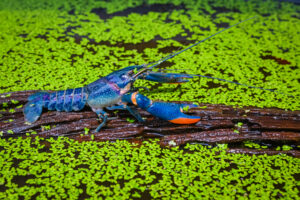
The Electric Blue Crayfish (Procambarus alleni) is a striking blue freshwater crayfish popular in aquaria for its color and active behavior. Adults show bold territorial behavior and will defend shelters while foraging along the substrate. They are not plant-safe and will uproot or eat softer flora, so choose tough plants or attach plants to hardscape. Care is straightforward with stable water, plenty of hides, and calcium for healthy moulting.

Quick overview
Electric Blue Crayfish, Blue Crayfish, Florida Crayfish
Procambarus alleni
Cambaridae
6–10 cm (2.5–4 inches)
Territorial, opportunistic
Bottom
40 liters (10 gallons) for one
Freshwater, pH: 6.5–8.0
6–12 dGH
Easy to medium
Ideal aquarium setup
Create a rocky, well-decorated tank with plenty of caves and PVC hides to break line of sight and reduce fights. Use stable water parameters with regular maintenance and provide secure lids to prevent escapes; avoid fragile plants and focus on hardscapes. A few anchored hardy plants can work if tied to wood or rock.
Provide at least 40 liters (10 gallons) for a juvenile but aim for 60 liters (15 gallons) or more for a comfortable adult to allow floor space and hiding spots. Wider footprints are better than tall tanks because crayfish need horizontal territory and room to forage.
Low to moderate lighting is best since these crayfish are mostly crepuscular and nocturnal and bright light will drive them into hiding more often. Dimming lights in the evening encourages natural activity and feeding.
Not plant-safe; they will uproot, trim, or eat many softer plants so choose tough species like Anubias attached to hardscape or use floating plants for cover. Expect some plant loss and plan planting accordingly.
Low to moderate flow to mimic slow waters and avoid stressing the crayfish while allowing scent trails for feeding.
Use sand or fine smooth gravel to allow digging and to protect delicate legs and gills; avoid very sharp substrates that can injure them during burrowing.
Provide multiple caves, rocks, and PVC tubes to create territories and shelters, and break line of sight to reduce aggression. Dense wood and layered rockwork give juveniles hiding places and help prevent constant encounters.

Behavior and temperament
Electric Blue Crayfish are territorial and will defend hides vigorously, especially at night when they forage. They are opportunistic feeders and will investigate tankmates, sometimes preying on slow or small animals. Moulting leaves them vulnerable, so frequent hiding spots are essential to avoid aggression and cannibalism. They can be bold and curious but also solitary by nature.
Diet and feeding
They are omnivorous scavengers that eat algae, detritus, plant material, and protein sources and will take advantage of slow or sick tankmates if given the chance. Offer a varied diet with sinking pellets, vegetables, and occasional protein treats to keep them healthy and support moulting.
What they eat in nature
detritus, algae, plant matter, small invertebrates, carrion
What to feed in the aquarium
- Sinking pellets or wafers
- Blanched vegetables such as zucchini and spinach
- Protein treats like frozen bloodworms or shrimp paste
Feeding schedule
Feed adults once daily or every other day in small portions, offering only what they consume within a few hours to avoid water fouling.
Special dietary needs
Provide calcium-rich foods or cuttlebone to support healthy moulting and shell development.
Daily:
Offer a small portion of staple sinking pellets or vegetables each day and remove uneaten food within a few hours to keep water quality high.
Weekly:
Include a protein-rich treat once or twice weekly and refresh calcium supplements such as crushed cuttlebone or mineral blocks as needed.
Always:
Always maintain a varied diet and steady water quality, and ensure hides are available before and after moulting to reduce stress and cannibalism.
Tankmate compatibility
They will prey on or harass slow bottom dwellers and small tankmates and are best kept with midwater fast swimmers or in species-only tanks. Nighttime hunting and strong territorial instincts make mixed tanks risky unless tankmates are quick, too large to be eaten, or occupy different zones.
Shrimp
No They will usually prey on dwarf shrimp and are unlikely to coexist safely, especially with juveniles or during moulting.
Snails
Small snails are often eaten and larger snails with heavy shells may survive but are still at risk from crushing or predation.
Peaceful fish
Fast midwater swimmers such as danios, rasboras, or larger tetras can work because they occupy different zones, but avoid slow bottom fish. Sturdy schooling fish that do not rest on the substrate are the safest companions.
Semi-aggressive fish
Semi-aggressive or territorial bottom dwellers and many cichlids can stress or be injured by crayfish, and aggressive fish may also attack a crayfish during moulting. Avoid pairing with species that frequently forage the substrate or bully tankmates.
Same species
Crayfish are typically aggressive toward conspecifics and require much larger tanks and many hides to attempt multiple individuals. Most hobbyists keep a single specimen unless housing in a very large tank with abundant territories.

Breeding
Breeding electric blue crayfish is possible in captivity and they will mate in suitable water conditions; females carry eggs under the tail until they hatch. Juveniles are vulnerable to predation and require many hiding places and stable water chemistry to survive.
Difficulty
Breeding is moderate because adults spawn readily but high juvenile mortality from cannibalism and poor water conditions can occur without ample shelters and stable parameters.
How they breed
Females carry eggs under the tail until hatching.
Best setup for breeding
Provide numerous small caves, dense root or rock structures, and fine substrate for juveniles to hide in, and maintain pristine water with good calcium levels. Separating adults or moving the female to a species-only breeding tank can greatly increase juvenile survival.
Feeding the babies
Young crayfish feed on biofilm and fine detritus and accept powdered foods or crushed sinking pellets, and benefit from finely crushed vegetables and microfoods. Offer very small frequent feedings and abundant micro-hides to reduce cannibalism.
Pro tips
Secure the tank lid to prevent escapes because they will climb and test waterline exits.
Offer cuttlebone or crushed cuttlebone regularly to provide essential calcium for moulting.
Provide multiple identical hides to reduce direct competition and let subordinates escape during conflicts.
Moulting issues
Poor water chemistry or low calcium can cause failed moults; correct hardness and add calcium supplements while ensuring stable parameters and accessible hides.
Escapes
Crayfish will climb out when stressed or exploring; fit a tight lid, seal filter intakes, and keep water levels slightly lower to reduce escape attempts.
Plant damage
They will uproot or eat many plants, especially soft stems and new growth; use hardy anchored plants or attach plants to rock or wood to reduce loss.
Typical beginner mistakes
- Poor water quality from overfeeding
- Keeping with small shrimp or slow bottom fish
- Insufficient hides leading to fights and stress
Short summary
The Electric Blue Crayfish is a striking and bold freshwater crayfish that is territorial and not plant-safe, making it better suited to rock-heavy or species-only tanks. Care is straightforward with stable water, ample hides, and calcium for moulting, recommended for hobbyists from beginner to intermediate.
Frequently asked questions (FAQs)
Are electric blue crayfish good for planted tanks?
Are electric blue crayfish good for planted tanks?
Generally no; they tend to uproot and eat many plants so only very hardy or attached plants are recommended.
Can they live with fish?
Can they live with fish?
Yes with caution; fast midwater fish that avoid the substrate are safest, but small or slow bottom dwellers are at risk.
How often should I feed them?
How often should I feed them?
Feed small portions once daily or every other day for adults and remove uneaten food to protect water quality.
Do they need calcium supplements?
Do they need calcium supplements?
Yes, providing calcium through foods or cuttlebone helps healthy moulting and shell repair.
Will two crayfish get along?
Will two crayfish get along?
Not reliably; they are territorial and require much larger tanks with many hides to minimize aggression.
How do I help during a failed moult?
How do I help during a failed moult?
Maintain excellent water quality, keep the crayfish isolated with hides, offer calcium, and avoid disturbing it; severe failed moults are often fatal and require prevention.

Mette Tulin
Mette Tulin is the creator of Aquascapedia, with more than 15 years of hands-on experience in aquascaping, planted aquariums, and freshwater fish, shrimp, crayfish, and snails. She shares practical insights, curated aquatic life profiles, and inspiration to help others build thriving underwater landscapes.