Nature style aquascape: The complete guide to Amano’s natural aquarium design

Nature style aquascaping is one of the most beloved approaches in the planted tank world. It’s calm, organic, atmospheric, and inspired by the philosophy of Takashi Amano, who turned aquariums into miniature reflections of real-world landscapes.
This guide walks you through the style, the design principles behind it, and how you can create your own underwater scene that feels natural, balanced, and full of life.

A nature style aquascape aims to recreate the feeling of real environments (riverbanks, forests, mountains, fields) inside an aquarium. Not by copying nature exactly, but by translating its shapes, patterns, and moods.
It differs from other styles like:
Amano’s philosophy is rooted in balance, imperfection, and natural flow. Nothing is perfectly symmetrical. Nothing is random. Everything feels like nature shaped it over time.
Because it looks peaceful, believable, and timeless. A good nature aquascape feels like a memory… a place you’ve been, or somewhere you wish you could go.
You don’t need artistic training or strict rules. Just an eye for what feels natural.
Yes, it’s one of the best styles for beginners.
You can mix plants, adjust as you go, and embrace imperfections. The style is flexible, forgiving, and incredibly satisfying to watch grow in.
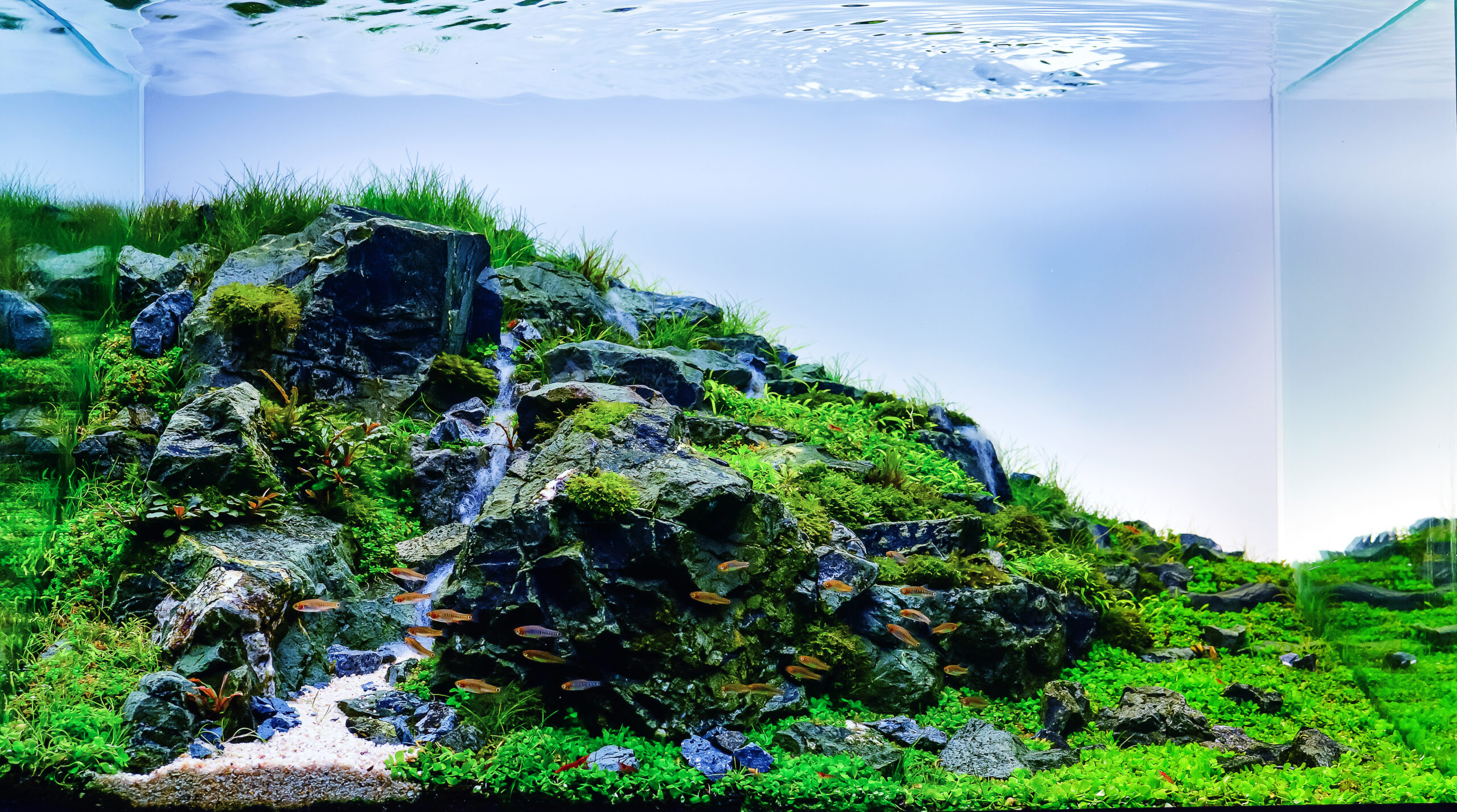
Nature style layouts may look relaxed and effortless, but there’s a bit of quiet strategy behind that natural charm. These principles help your scape feel organic instead of accidental.
Don’t think, “Where should this rock go?”, think, “What is this place?”. You’re not arranging decorations, you’re shaping a tiny landscape.
Picture: insead:
When you design with a “scene-first” mindset, your hardscape choices feel more purposeful. Browse real landscape photos to spark ideas, not to copy details, but to borrow the mood and the flow of shapes.
Most nature-style layouts follow one of three classic shapes. They keep the scape coherent and help guide the viewer’s eye.
Concave (valley layout): High on both sides, dipping in the center, like a welcoming valley.
Convex (island layout): A bold mound or peak in the middle, softening as it spreads out.
Triangle (slope layout): Tall on one side, sloping down to the opposite corner, dynamic and natural.
Picking your composition early gives your layout structure and direction, so you’re not “winging it” as you go.
Every great nature scape has a subtle star of the show. Something that quietly draws attention! You can establish your focal point with:
It doesn’t need to be dramatic or oversized. It just needs to feel intentional, like nature highlighted it on purpose.
Depth is what makes an aquarium look bigger than it really is. Fortunately, you can fake depth with a few simple tricks:
Think of your scape like a miniature diorama: layers and scale create magic.
Hardscape forms the bones of your layout. Plants add the softness, color, and movement.
If you cover every rock and branch, you lose the structure that makes nature style shine. Aim to keep 30–50% of the hardscape visible, so the underlying shape still guides the scene.
Negative space is simply the beauty of “nothing.” Clear sand patches, open paths, and empty pockets create breathing room. They make your scape feel calm, grounded, and realistic. In nature, not every inch is filled with growth. Your aquascape shouldn’t be either.
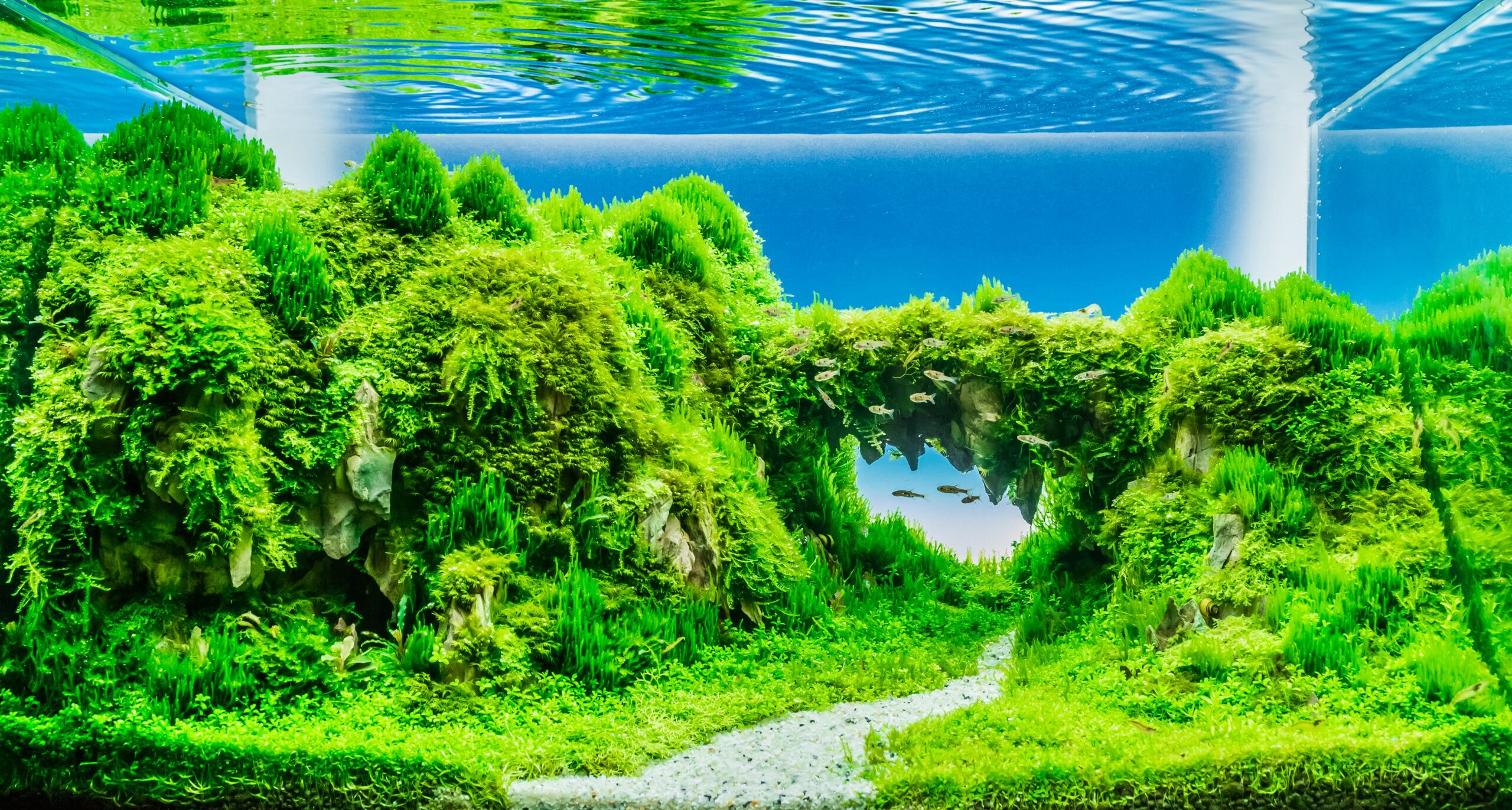
The charm of a nature-style aquascape comes from how stones, wood, plants, and equipment all work together. Each element has a job — hardscape sets the structure, plants soften and fill the scene, and equipment keeps everything healthy behind the scenes. When these pieces click, your tank feels like a real, miniature ecosystem.
Hardscape is the backbone of your layout. It gives shape, direction, and personality long before the plants grow in.
Popular choices include:
Each type has its own energy. Pick one stone type for consistency — mixing too many often breaks the natural illusion.
Wood brings height and flow, and it immediately adds a forest-like feeling.
Great options are:
All three have interesting branches and natural curves perfect for creating flow.
To avoid the classic “pile of rocks” problem:
When your hardscape looks like it belongs in the tank (as if nature placed it) you’re on the right track.
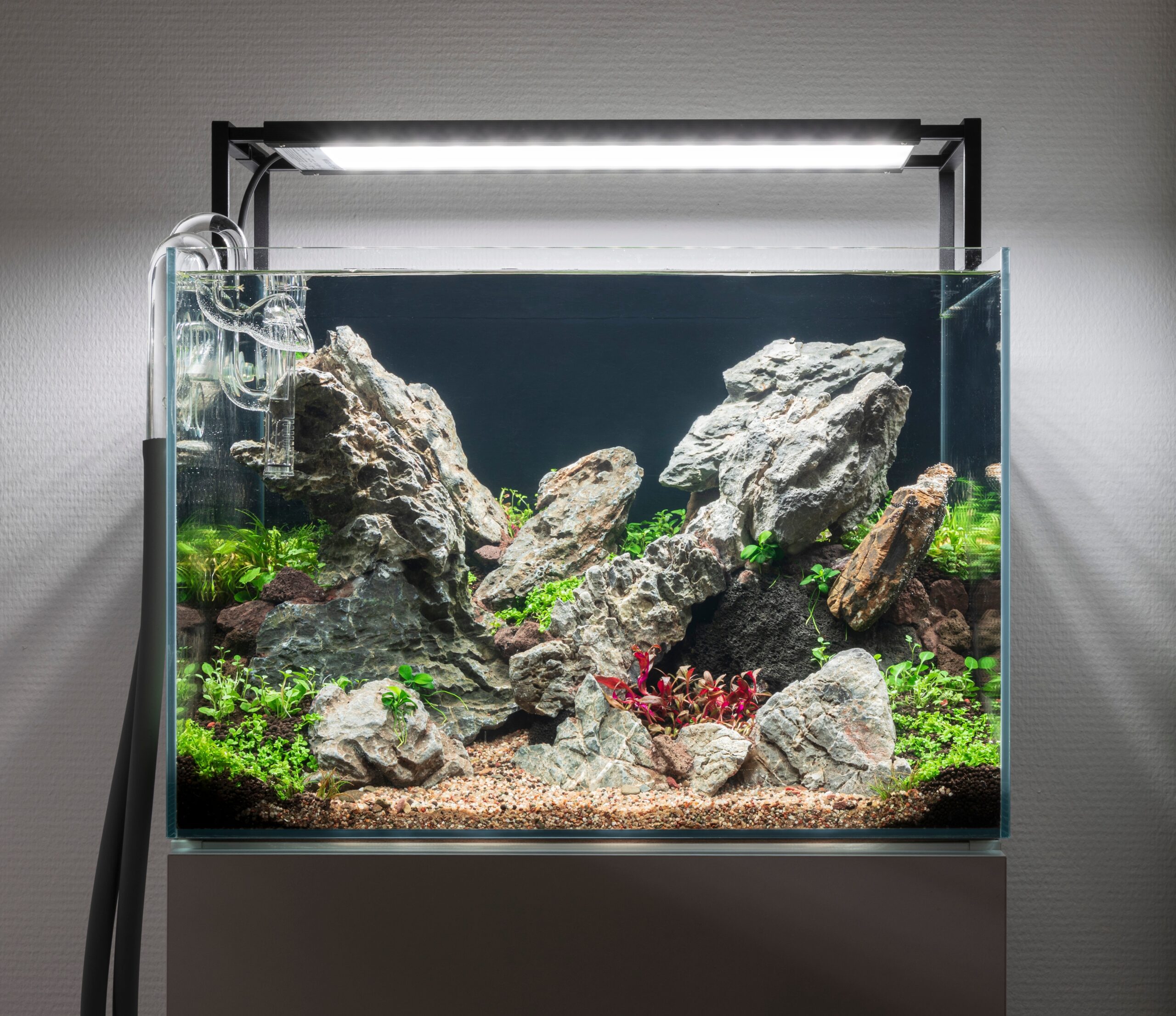
Plants are what make a nature scape feel soft, alive, and organic. Different layers help create depth and structure.
Perfect for clean, natural ground cover:
These create lush carpets that frame your hardscape.
These plants are ideal for filling space around your stones and wood:
They break up hard edges and make transitions feel seamless.
These create movement, color, and a soft backdrop:
Perfect for building depth and framing the whole scene.
Use these sparingly to add texture and small natural touches:
A little moss on wood goes a long way toward achieving the classic “Amano” look.
Yes, absolutely!
Nature style works very well as a low-tech setup. Growth will be slower, but maintenance becomes easier and the scape often looks more relaxed.
Easy low-tech plants include:
These thrive in moderate light and don’t demand high-tech equipment.
Aim for 20–50 lumens per liter, depending on your plant choices. Start with 6 hours of light daily during the first few weeks, then gradually increase to 8 hours.
Moderate lighting supports healthy plant growth while keeping algae manageable.
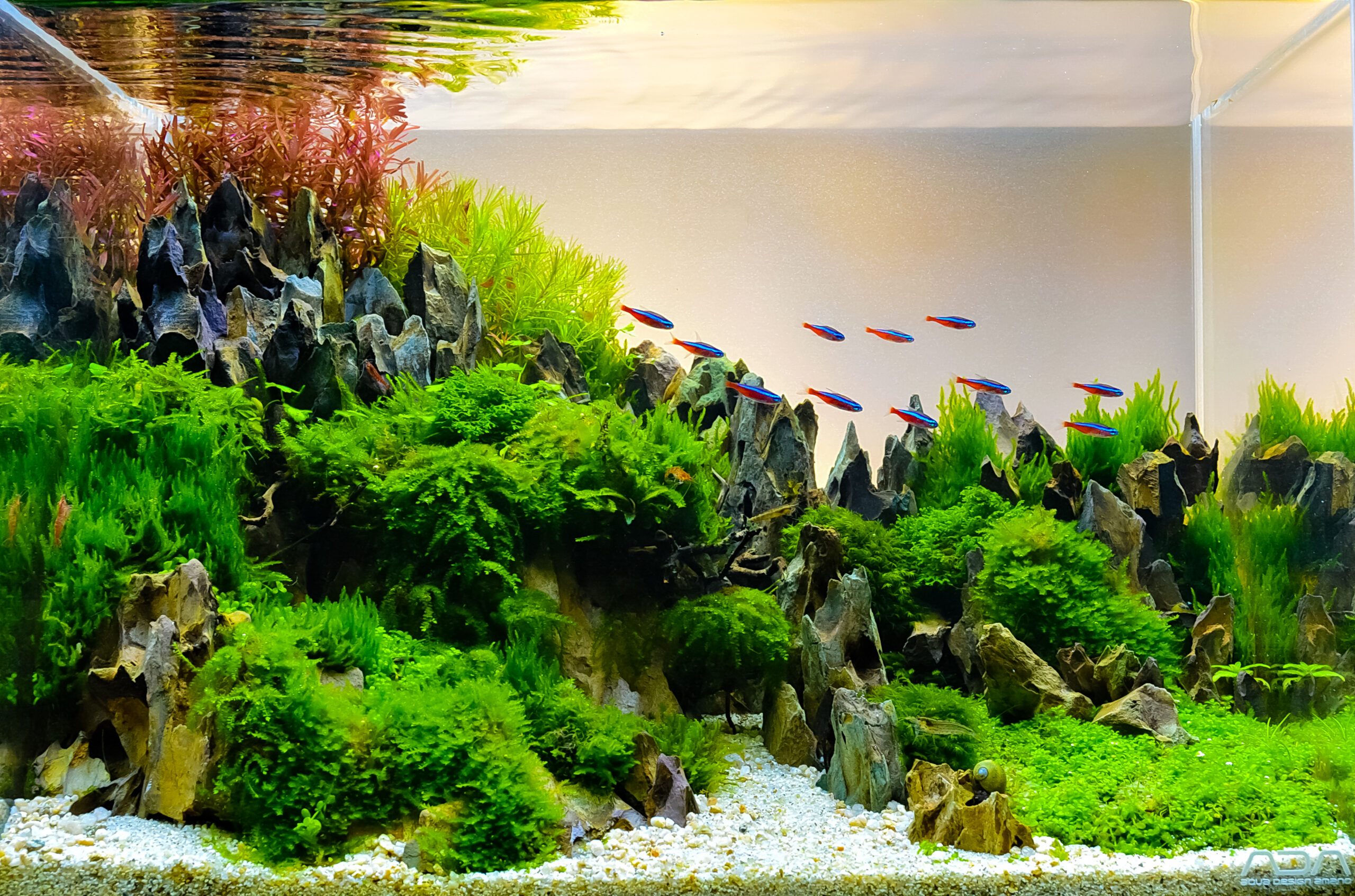
Fish and invertebrates are the finishing touches that bring movement, personality, and rhythm to your scape. The goal is to choose species that enhance the natural atmosphere, not overwhelm it.
Small, peaceful schooling fish fit perfectly into nature-style layouts. They create gentle motion and make the whole scene feel alive.
Great choices include:
Keep them in groups of 8–12 or more so they display their best schooling behavior and move as a unified, natural-looking group.
Shrimp and snails aren’t just cute! They’re part of your maintenance team.
Top picks:
These hardworking little critters graze on algae, clean surfaces, and keep the tank tidy while adding subtle activity throughout the layout.
Nature style shines brightest with calm, understated species. Look for fish and shrimp that:
Think of them as actors in a peaceful landscape rather than the stars of a show. Their role is to enhance the atmosphere, not dominate it.
Nature style aquascaping lets you build a peaceful, organic world where plants, hardscape, and flow all work together. There’s no rigid formula, just inspiration, observation, and a love of nature. Take your time, trust your eye, and enjoy watching your tiny landscape come alive!


Introduction to aquascaping styles Aquascaping is the art of creating underwater landscapes using plants, rocks, wood, and fish. It’s a…


Dutch style aquascaping is one of the oldest and most colorful planted-aquarium styles. Instead of dramatic rocks or twisted driftwood,…
What is Iwagumi? Iwagumi is one of those aquascaping styles you instantly recognize: clean, calm, and seriously beautiful. It might…

Jungle style aquascaping is vibrant, immersive, and intentionally a little untamed. Instead of strict lines or carefully pruned groupings, this…
If you want an aquarium that feels like a real slice of nature (not just inspired by it, but built…


