Introduction to aquascaping styles
Aquascaping is the art of creating underwater landscapes using plants, rocks, wood, and fish. It’s a bit like photography or architecture: the layout only works when you understand composition, design, and the mood you want to create.
That’s where styles come in. They give you a visual language to follow and help you decide how to shape your scape, choose plants, and balance the whole layout.
There are well-known styles like Iwagumi and Nature Aquariums. If you want a deep dive into those, you can read more here. But in this article, we’ll focus on how different styles actually work in practice and how they influence your layout, equipment choices, maintenance, and how the tank matures over time. By the end, you’ll have a better sense of which style fits your experience, goals, and the look you’re after.
A short historical background
Modern aquascaping didn’t appear out of nowhere. Let’s start with a quick look at where it all began.
The Dutch tradition
The Dutch style began in the 1930s and was one of the first formal aquascaping methods. It focused on organized plant groups, strong color contrasts, terracing, and lots of plant variety… basically an underwater garden.
Amano and the Nature Aquarium movement
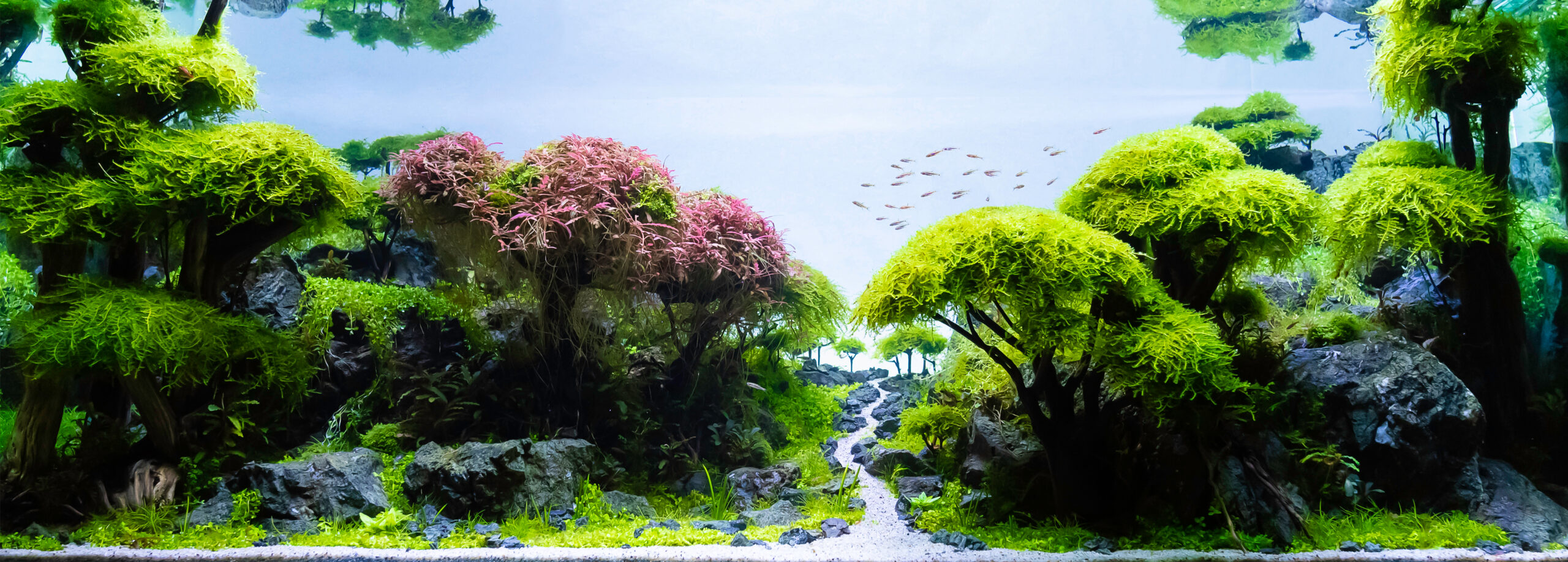
Decades later, Takashi Amano transformed the hobby with his Nature Aquarium approach. Drawing from Japanese aesthetics and natural landscapes, he introduced ideas like gentle asymmetry, open space, and the interplay of between hardscape and plants. His work laid the groundwork for many of today’s popular styles.
Together, these two traditions shaped almost everything we recognize in modern aquascaping.
Why style categories are helpful
Style categories serve as practical creative tools:
- Design frameworks: They give you a basic structure to work from, which is especially helpful when you’re learning how to build a balanced layout.
- Shared terminology: Styles also create a common language, making it easier to talk about techniques, materials, and design choices with other aquascapers.
- Creative inspiration: And of course, styles can inspire you. You can follow them closely, mix them together, or break them completely as your own vision develops.
When you understand aquascaping styles, it’s easier for you to experiment and eventually create a look that feels like your own!
Broad categorization of aquascaping styles
Before diving into the details, it helps to know the main style families you’ll see in the aquascaping world. Each one has its own look, philosophy, and way of balancing plants and hardscape. Here’s a quick overview of the big categories and what makes each of them unique.
Nature
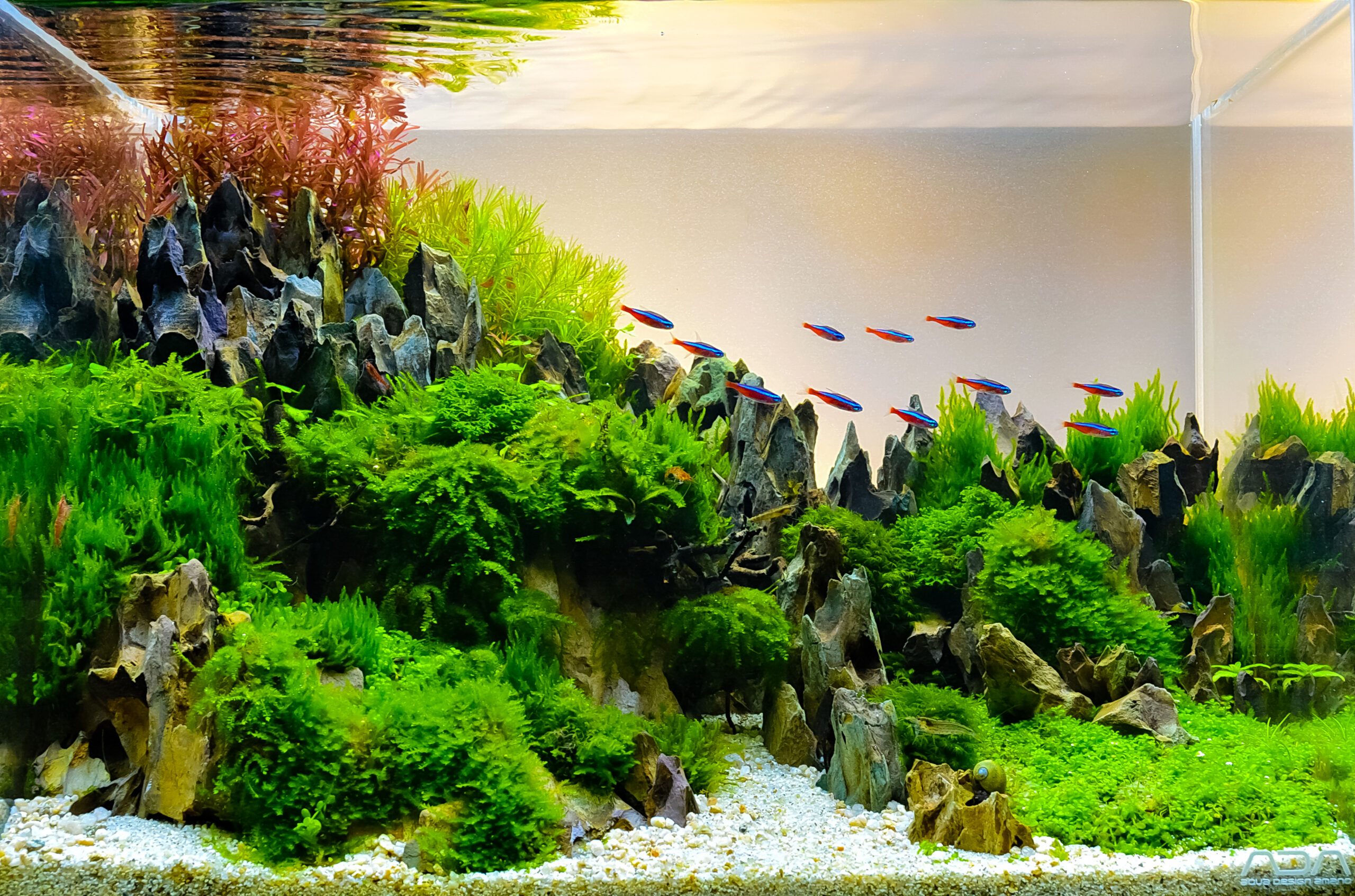
The Nature style focuses on capturing the elegance of real, natural landscapes. They’re inspired by forests, mountains, and riverbanks. These layouts use asymmetry, open space, and harmony between hardscape and plants. The goal isn’t to copy a scene exactly, but to recreate its mood and atmosphere.
Learn more about the nature styled aquarium.

Iwagumi
Iwagumi is a minimalist branch of the Nature style, built around a rock composition. A main “master stone” sets the scene, supported by smaller companion stones. Planting is simple (usually low carpets) to keep the focus on the stone arrangement overall balance.

Dutch
Dutch aquascapes look like underwater botanical gardens. Instead of bold hardscape, carefully arranged plant groups create color, contrast, and structure. Terracing and “streets” of plants give the layout depth. It’s vibrant, organized, and very technique-driven.
Learn more about Dutch aquascaping.

Jungle
The Jungle style celebrates a wild, untamed look. Tall plants and dense growth create a lush, overgrown feel. Hardscape is often partially hidden, giving the impression of a naturally overgrown habitat. Perfect if you like a more spontaneous, natural vibe.
Learn more about the Jungle style.

Biotope
A Biotope aims to replicate a specific natural environment, both in design and ecology. Everything, from the plants and substrate to the water parameters and fish, matches a real-world habitat. The layouts are often simple visually, but they’re loved for being true-to-nature and educational, offering a window into real underwater ecosystems.
Learn more about the Biotype style.
What defines an aquascaping style?
Hint: It’s more than just looks. An aquascaping style is the mix of design, biology, and technical choices that give a layout its character.
Design
Your style starts with the look you want to create.
- Composition guides the viewer’s eye through the layout, whether through symmetry, asymmetry or carefully placed focal points.
- Color sets the mood of the tank.
- Scale (how big your plants and hardscape are) creates depth and realism.
Together, these choices form the visual backbone of a layout.
Biology
Because your tank is alive, biology shapes the style just as much as design does. The plants create texture and structure, and their growth patterns influence how the scape changes over time. Water flow, nutrients, and even microbial life affect how the environment matures. Fish, shrimp, and snails add motion and help define the “story” your layout tells.
Technical setup
Equipment determines what’s possible. High-tech tanks with CO₂ and strong lighting can support demanding stem plants and vibrant Dutch or Nature Aquarium layouts. Low-tech setups favor resilient species and slower-growing styles, such as biotopes or jungle tanks. Filtration, circulation, and fertilization all contribute to long-term stability of the aquascape.
When everything clicks, aquascape magic happens
A style is really the balance between all these elements. When your layout supports a healthy ecosystem, and that ecosystem makes the design look its best, everything clicks. Once you understand this balance, it becomes much easier to choose (or even create) a style that fits your vision and grows beautifully over time!
Core design principles for any aquascape
Every great aquascape starts with a few essential building blocks. These ideas guide how you arrange your hardscape, place your plants, and lead the viewer’s eye through the layout. Master these, and any style becomes easier to design and more rewarding to grow!
Compositional guides
Most tanks benefit from classic visual principles:
- The rule of thirds helps you place key elements in a balanced, dynamic way.
- The golden ratio offers a more natural approach to positioning focal points.
- Triangular or sloped layouts add flow and movement, making the scape feel more immersive.
And remember, these aren’t strict rules, just reliable starting points for building appealing designs.
Focal points, negative space, and depth
A good aquascape knows exactly where it wants your eyes to go, and it does that using three key tools:
- A focal point (like a standout rock, branch, or plant) to anchor the layout
- Negative space (open areas) to keep the tank from looking cluttered and to add realism.
- Depth, created through layering, varying plant sizes, and smart placement, which helps even small tanks feel larger and more three-dimensional.
Hardscape choices
Your hardscape plays a huge role in shaping the style of a tank. Stones give Iwagumi its clean, structured look, while driftwood adds natural movement to Nature and Jungle layouts. The type of rock or wood used (sharp, smooth, twisted, or root-like) shapes the emotional tone of the entire design. In many cases, the hardscape you choose decides the style long before you start planting.
Plant layout and zones
Many aquascapes rely on intentional plant zoning:
- Front: Foreground plants create low carpets and textures.
- Mid: Midground plants soften transitions and add layers.
- Back: Background species bring height and depth.
Each style uses these zones differently: Dutch tanks arrange them into structured terraces, Nature layouts blend them more softly, and Jungle scapes let height and density take over. Understanding this framework helps your aquascape grow in a stable, cohesive way.
Quick style selector
Find your style in less than 10 seconds. Select the tab with the style you want!
You should go for Iwagumi.
Go for a nature styled aquarium.
A Dutch-style tank is your match.
If this is what you’re after, go for a Jungle-style tank.
In that case, a Biotope-style aquarium is the way to go.
Five factors to help you choose the right aquascaping style
Every aquascaping style comes with its own demands and strengths. To choose the one that will work best for you, it helps to look beyond aesthetics and consider a few practical factors. These five will guide you in the right direction.
1. Aquarium size and proportions
Your tank’s shape plays a huge role in what styles will actually work.
- Shallow, wide tanks are great for sweeping Nature or Iwagumi layouts.
- Taller tanks shine in dramatic Jungle or Dutch designs.
- Small tanks often benefit from minimalist styles, while large aquariums can handle complex, multi-layered layouts.
Matching the style to the tank’s geometry makes the design feel natural instead of forced
2. Your experience and available time
How much time can you realistically invest in your tank? Some styles need frequent trimming, careful balancing, and more advanced plant care (e.g. Dutch and Iwagumi). Others, like Jungle tanks or Biotopes, grow more freely and don’t need as much hands-on attention.
Your experience level and the time you can commit should guide your choice so the hobby stays enjoyable and sustainable.
3. Budget considerations
Some styles simply cost more than others. Hardscape materials like premium stones and intricate driftwood can get expensive, especially if the style relies on large amounts of them. High-tech gear (like CO₂ systems, strong lighting, and advanced filtration) adds to the budget as well.
If you want to keep costs down, low-tech or plant-heavy styles are usually more affordable. Hardscape-focused or high-tech layouts tend to require a bigger investment.
4. Desired atmosphere
Each aquascaping style brings its own emotional tone:
- Calm: Iwagumi or minimalist Nature layouts
- Dramatic: High-contrast Nature or diorama-style scapes
- Naturalistic: Jungle tanks and relaxed Nature layouts
- Color-focused: Dutch aquascapes with bold, vivid plant palettes
Choosing the mood you want your aquarium to express makes it much easier to pinpoint the style that fits your vision.
5. Plants and animals you want to keep
The species you love can naturally guide you toward the right style. Fast-growing stems belong in Dutch tanks, epiphytes shine in Nature layouts, and hardy low-tech plants are perfect for Jungle or Biotope setups. Many fish and invertebrates also have preferred environments. Soft-water forest species, for example, are ideal for Biotopes or shaded Nature scapes.
When your style matches the needs of the plants and animals you want to keep, the result feels both beautiful and biologically balanced. And choosing a style becomes much easier when you look at it this way.
How your aquascaping style influences the technical setup
Every style comes with its own technical needs. The look you’re aiming for will influence your lighting, CO₂, filtration, and even how the water should move. Understanding these links makes planning your setup much easier.
Light levels across different style types
Lighting has a huge impact on what styles you can create.
- High light supports vivid colors, fast growth, and dense planting (crucial for Dutch tanks and high-energy Nature layouts).
- Medium light works well for balanced, mixed-plant aquascapes.
- Low light suits slow-growing styles like Jungle tanks and Biotopes.
Choosing your light level is often the first technical decision shaped by your chosen style.
CO₂ needs for carpeting plants, stems, and nature layouts
CO₂ is closely tied to your stylistic goals.
- Carpeting plants (like HC or Monte Carlo) almost always need high CO₂ for compact, healthy growth.
- Stem-heavy styles, such as Dutch layouts, rely on CO₂ to maintain strong color, dense growth, and quick recovery after trimming.
- Nature aquascapes often use CO₂ to achieve lush plant health and clean, detailed textures.
- Low-tech styles (especially Jungle tanks and many Biotopes) thrive without added CO₂ by using hardy, slower-growing species.
Flow, filtration, and water parameters
Different styles benefit from different approaches to water movement and filtration.
- Most high-tech planted tanks benefit from strong, even flow to distribute nutrients and CO₂.
- Biotopes may require calm water or fast flow, depending on the habitat being recreated.
- Filtration should match both plant density and the fish you plan to keep.
- Water parameters (pH, hardness, temperature) must support the plants and animals typical of the style.
Why some styles require high-tech
Plant-demanding styles (like Dutch tanks or crisp, modern Nature layouts) almost always rely on high-tech equipment. Strong light, CO₂, and reliable nutrient delivery are what keep these designs looking vibrant, clean, and stable.
…and why others work better as low-tech
Styles that focus on natural overgrowth or ecological realism (Jungle tanks, relaxed Nature layouts, and most Biotopes) often do better with low-tech setups. Slow-growing plants and simple hardware create stable, low-maintenance tanks with far less intervention.
Common misconceptions about aquascaping styles
Even widely used styles are often misunderstood. Hopefully, these clarifications help you design more creatively rather than feel limited by “rules”!
Myth 1: “Styles come with strict rules you have to follow.”
Reality: Styles are guidelines, not laws. They give you structure and inspiration, but many great aquascapes mix elements from different styles. Creativity matters more than following a rulebook.
Myth 2: “Iwagumi is only stones.”
Reality: Stones define the composition, but plants are essential to balance the layout. Most Iwagumi tanks use carpets and small accent plants to support the rockwork and create scale.
Myth 3: “Dutch style is just about colorful plants.”
Reality: Color is only one component. True Dutch layouts rely on organized plant groups, terracing, and contrasts in shape and texture. Without structure, it isn’t Dutch.
Myth 4: “Biotopes can’t be beautiful.”
Reality: Biotopes focus on ecological accuracy, not decoration, but that authenticity can create subtle, atmospheric layouts with a unique charm that stylized tanks can’t replicate.
Myth 5: “Nature style is the same as a biotope.”
Reality: Nature Aquarium is inspired by the feeling of natural landscapes, not their exact conditions. They’re artistic interpretations, while Biotopes aim for ecological correctness. Very different goals.
Myth 6: “Jungle aquascapes have no rules and no planning!”
Reality: Jungle layouts may look wild, but the chaos is intentional. Height variation, controlled lighting, hidden hardscape, and carefully chosen plants all work together to create that overgrown feel. Without a plan behind it, the tank won’t look “jungle-like”… it’ll just look messy and unbalanced.
How to create your own style
Ready to make a style that’s truly yours? Here’s how.
Combining inspiration from multiple traditions
Creating your own style doesn’t mean starting from scratch. It means borrowing the strengths of existing approaches and blending them into something that feels personal.
Maybe you love the structured plant groups of Dutch tanks, the atmospheric hardscape of Nature layouts, and the authenticity of Biotopes. Mix what speaks to you! This is how your creative vocabulary grows and how your own style starts to take shape.
Nature rarely follows rules
While design guidelines like the rule of thirds are helpful, nature itself is messy, irregular, and wonderfully unpredictable. Keeping this in mind frees you to break the rules when it feels right. Follow your intuition, let the layout evolve, and treat the rules as your guide.
Build function first, then aesthetics
A beautiful aquascape always starts with biology. Focus on healthy plants, compatible species, and strong ecological balance before perfecting the look. Stable nutrients, good flow, and solid root systems give you a foundation that lets your artistic vision last. A tank that looks great but struggles biologically won’t stay great for long.
Home aquariums vs. competition layouts
Competition aquascapes are designed for one perfect moment. For that single photo when everything is at its peak. They usually require intense upkeep, heavy trimming, and dramatic hardscape that isn’t always practical at home.
Home aquariums are different. They’re meant to be lived with. They prioritize long-term stability, plant and fish health, and a layout that still looks good months later.
When creating your own style, decide which path you’re designing for:
- a short-lived showpiece, or
- a sustainable, everyday display.
Both are valid. They just demand different expectations and approaches.
Conclusion
Aquascaping styles are helpful guides. They give you structure and a shared language, but the real magic happens when you adapt them to your own vision. This hobby lives where biology and creativity meet, and every tank teaches you something new about both.
Don’t be afraid to experiment, break rules, and explore! Your best work will grow from curiosity and practice. In the end, aquascaping is an ongoing journey shaped by observation, imagination, and a love for the underwater world.

Mette Tulin
Mette Tulin is the creator of Aquascapedia, with more than 15 years of hands-on experience in aquascaping, planted aquariums, and freshwater fish, shrimp, crayfish, and snails. She shares practical insights, curated aquatic life profiles, and inspiration to help others build thriving underwater landscapes.
You might also like...
-

Dutch style aquascaping is one of the oldest and most colorful planted-aquarium styles. Instead of dramatic rocks or twisted driftwood,…
-
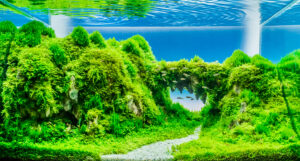
Nature style aquascaping is one of the most beloved approaches in the planted tank world. It’s calm, organic, atmospheric, and…
-

Jungle style aquascaping is vibrant, immersive, and intentionally a little untamed. Instead of strict lines or carefully pruned groupings, this…
-
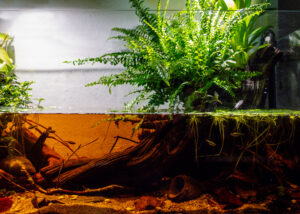
If you want an aquarium that feels like a real slice of nature (not just inspired by it, but built…
-
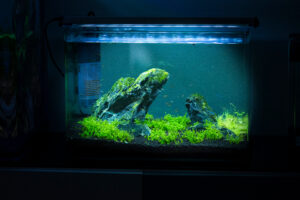
What is Iwagumi? Iwagumi is one of those aquascaping styles you instantly recognize: clean, calm, and seriously beautiful. It might…


